

Table of Contents
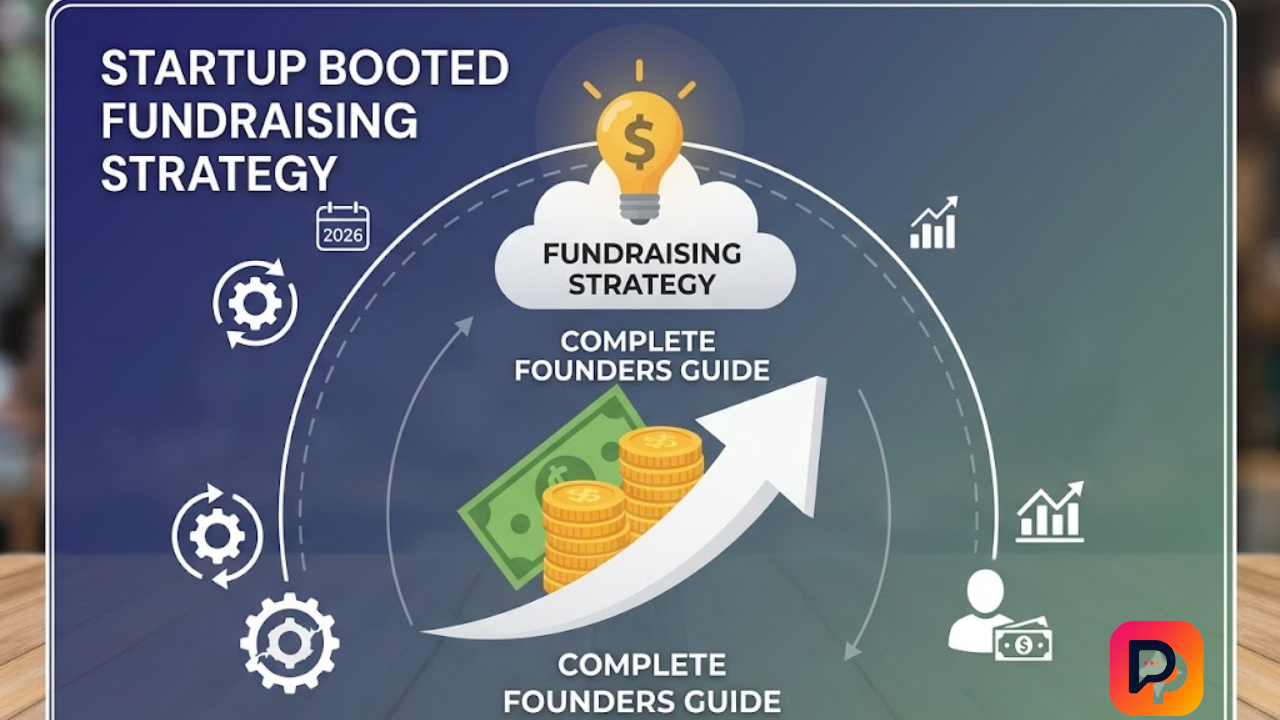
Building a startup creates a difficult financial question almost immediately: should you keep funding the company yourself, raise outside capital, or combine both approaches? The startupbooted fundraising concept offers founders another way to think about that decision. Instead of treating bootstrapping and fundraising as opposites, it focuses on building traction independently and introducing external capital only when it can create meaningful leverage.
StartupBooted describes its fundraising approach as founder-led and revenue-focused, with selective capital raising designed to preserve control and reduce unnecessary dilution. Its broader services also cover financial modeling, budgeting, strategic planning, fundraising positioning, and investor pitching.
That distinction matters. Raising money is not automatically a sign that a startup is succeeding, just as avoiding investors does not automatically make a company financially stronger. Capital should solve a specific business constraint.
For founders researching startupbooted, the more useful question is therefore not simply, “How can I raise funding?” It is, “What type of capital will make my company stronger without creating obligations that outweigh its benefits?”
This guide explains that decision from strategy and financial preparation to investor outreach, dilution, pitch development, due diligence, and long-term founder control.
What Does StartupBooted Mean for Founders?
The term startupbooted is closely associated with StartupBooted and should not be confused with a universally standardized financial category. StartupBooted presents its fundraising strategy as a position between pure bootstrapping and conventional venture-backed growth.
Traditional bootstrapping means building a business primarily through founder savings, operating revenue, careful cost management, and reinvested profits. The U.S. Small Business Administration similarly describes self-funding, or bootstrapping, as using your own financial resources to support a business.
A StartupBooted-style strategy allows external money to enter the picture, but preferably after the company has developed greater negotiating leverage.
That leverage might come from customers, recurring revenue, improving margins, proven demand, intellectual property, partnerships, strong retention, or another credible indicator that the business is becoming more valuable.
| Funding Model | Primary Capital Source | Founder Control | Typical Growth Philosophy | Dilution Risk |
| Traditional Bootstrapping | Founder resources and revenue | Very high | Sustainable organic growth | Very low |
| StartupBooted Approach | Revenue plus selective external capital | High to moderate | Capital used strategically | Controlled but possible |
| Traditional VC Model | External equity investors | Shared | Rapid scaling | Potentially significant |
| Debt-Focused Model | Loans or credit facilities | Operational control retained | Growth supported by repayment obligations | Usually no direct equity dilution |
The important lesson is that startupbooted should be understood as a capital strategy rather than a refusal to raise money.
Why Founder Control Matters in a StartupBooted Strategy
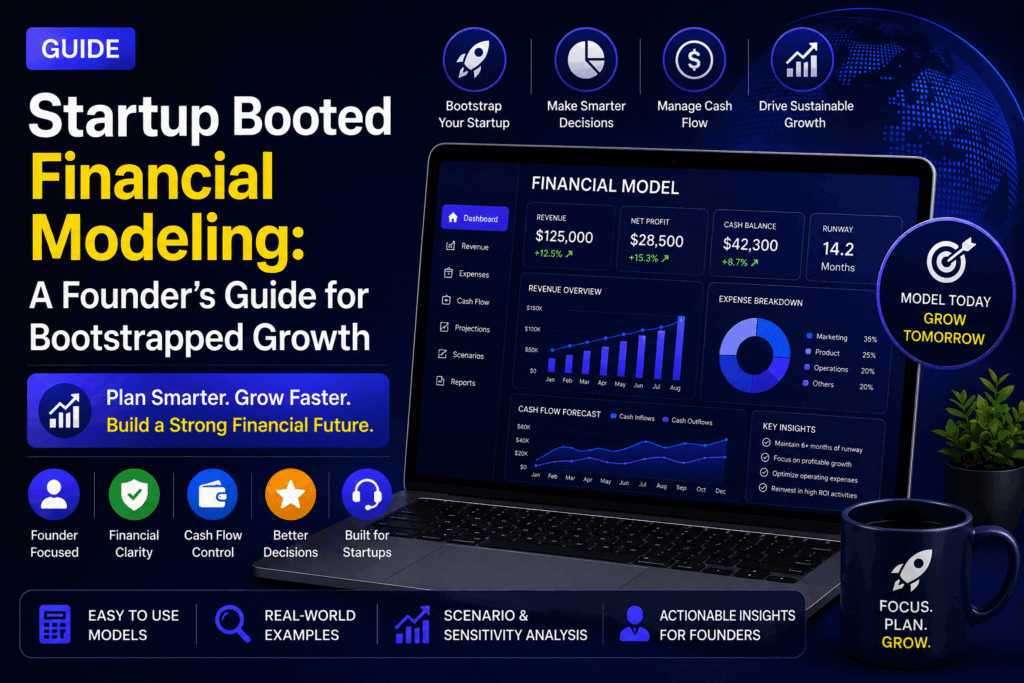
Control is one of the most valuable assets a founder possesses, yet it is rarely shown on a balance sheet.
When founders own a larger percentage of their business, they generally have greater influence over product direction, hiring, pricing, market selection, strategic partnerships, and the timing of future financing or acquisition discussions.
The startupbooted approach is attractive because it encourages founders to consider the cost of capital beyond the amount appearing in the bank account.
Equity financing has no traditional monthly repayment schedule, but it carries an ownership cost. Debt preserves equity but creates repayment obligations. Bootstrapping preserves ownership but can restrict growth when cash generation cannot support attractive opportunities.
Recent Carta data illustrates why dilution deserves attention. Its 2025 Founder Ownership Report found that the median founding team in its dataset retained 56.2% of startup equity after a seed round, falling to 36.1% at Series A and 23% at Series B. These figures describe Carta’s dataset rather than every startup, but they demonstrate how ownership can decline through successive financing rounds.
A founder should therefore measure both how much money is being raised and what is being exchanged for it.
Revenue Should Come Before Fundraising Whenever Possible
One of the strongest principles behind startupbooted fundraising is developing evidence that customers actually want what the company provides.
Revenue changes fundraising conversations.
An investor evaluating a pre-revenue company must make assumptions about whether customers will eventually pay. When customers are already buying, the discussion can move toward retention, expansion, acquisition economics, margins, market size, and scalability.
Stripe’s guidance on bootstrapping emphasizes personal savings, lean operations, revenue reinvestment, customer-focused development, strategic growth, and maintaining financial stability. These practices can help founders strengthen a business before seeking substantial outside investment.
Revenue does not mean a company must already be profitable. Some promising companies intentionally reinvest aggressively.
What matters for a startupbooted strategy is evidence that the startup understands how money enters the business and what needs to happen for that economic engine to become larger.
Traction Is More Than Revenue
A founder should not reduce traction to one impressive sales figure.
Investors may examine revenue growth, recurring revenue quality, gross margins, customer concentration, churn, retention, acquisition costs, sales cycles, pipeline quality, customer engagement, contract duration, product usage, and expansion behavior.
The right metrics depend heavily on the business model.
A SaaS founder may emphasize recurring revenue and net retention. A marketplace may focus on transaction volume and liquidity. A consumer application may need convincing engagement and retention data before monetization becomes the central story.
The stronger the evidence, the more negotiating power startupbooted founders can potentially create before approaching investors.
Decide How Much Capital the Business Actually Needs
A common fundraising mistake is deciding to raise “as much as possible.”
A better startupbooted approach starts by identifying the milestone the capital needs to achieve.
Imagine that a startup has reached early product-market validation but its sales capacity is limiting expansion. The founder may need capital to hire salespeople, strengthen customer success, improve infrastructure, and finance several months of operating runway.
That is fundamentally different from raising money without knowing what the next stage should look like.
| Capital Question | Weak Fundraising Logic | Stronger StartupBooted Logic |
| Why raise now? | Competitors are raising | A defined constraint is limiting growth |
| How much is needed? | Maximum available amount | Enough to reach the next valuable milestone |
| What will funds support? | General expansion | Clearly modeled investments |
| What happens afterward? | Raise another round | Reach stronger revenue, profitability, or financing position |
| How is success measured? | Higher valuation | Improved business fundamentals |
Financial modeling becomes especially important here.
Founders should model their expected revenue, expenses, hiring, customer acquisition, gross margin, cash burn, runway, and alternative scenarios before deciding on a fundraising target.
The purpose is not to predict the future perfectly. It is to understand what assumptions must be true for the fundraising plan to work.
Choosing the Right Funding Source for StartupBooted Growth
External capital is not a single product.
A startupbooted founder can potentially evaluate equity financing, angel capital, SAFEs, convertible instruments, loans, microloans, strategic investment, crowdfunding, grants, revenue-based financing, customer prepayments, or operating cash flow.
Different instruments create different obligations.
| Funding Type | Equity Dilution | Repayment Requirement | Best Suited To |
| Founder Revenue | None | None | Businesses capable of organic growth |
| Angel Equity | Yes | Usually no | Early companies needing expertise and capital |
| Venture Capital | Yes | Usually no | High-growth, large-market businesses |
| SAFE | Future dilution | Usually no traditional repayment | Early-stage fundraising |
| Traditional Debt | Usually none | Yes | Businesses with predictable repayment ability |
| Microloan | None | Yes | Smaller capital requirements |
| Grant | Usually none | Usually none | Eligible projects or companies |
| Strategic Investment | Often yes | Depends on structure | Companies gaining commercial value from the investor |
For example, the SBA Microloan Program currently provides eligible U.S. small businesses with loans of up to $50,000 through approved intermediary lenders. The average microloan is approximately $13,000. Eligibility and lending requirements vary by intermediary.
This illustrates an important startupbooted principle: founders should explore the smallest appropriate financing tool before automatically pursuing the largest available equity round.
Understanding SAFEs and Future Dilution
SAFEs have become an important part of early-stage startup financing.
Y Combinator introduced the Simple Agreement for Future Equity in 2013 and later released the post-money SAFE structure. YC explains that a major advantage of the post-money version is that founders and investors can calculate more clearly how much ownership has effectively been sold through the SAFE financing.
That visibility is essential for startupbooted founders focused on ownership.
A SAFE may appear simpler than a priced equity round, but simple documentation does not eliminate economic consequences. Multiple SAFEs issued at different valuation caps or terms can materially affect ownership once they convert.
Founders should understand the capitalization table under multiple scenarios before signing financing documents.
Legal structures also vary internationally. YC specifically advises companies using its international SAFE documents to consult lawyers licensed in the relevant jurisdiction.
Fundraising strategy should therefore involve qualified legal, accounting, tax, and financial professionals where appropriate rather than relying entirely on online templates.
Build an Investor-Ready Financial Model
An impressive presentation cannot rescue weak financial logic.
For a startupbooted founder, a credible financial model should connect business activity to revenue and cash requirements.
If revenue depends on acquiring customers, the model should show assumptions about acquisition volume and cost. If additional revenue requires hiring sales representatives, assumptions about hiring dates, ramp periods, productivity, and compensation should be visible.
The same principle applies to product development.
If raising $1 million allows the startup to hire engineers and launch a product that is expected to increase recurring revenue, investors should be able to understand the relationship between the capital, the execution plan, and the expected outcome.
StartupBooted itself describes financial modeling and budgeting as part of its wider consulting offering, alongside fundraising strategy and strategic planning.
A model that founders genuinely use to manage the company is usually more persuasive than one created exclusively for fundraising.
Create a Pitch Investors Can Understand Quickly
The best pitch deck is not the deck containing the most information.
It is the one that makes the opportunity understandable.
A strong startupbooted fundraising narrative should explain what problem exists, who experiences it, why existing alternatives are inadequate, what the company provides, why customers care, how the company makes money, what traction has been achieved, why the opportunity can become substantial, and why this team is positioned to execute.
Those ideas should connect naturally.
For example, if a founder says the company operates in a massive market but has no clear customer segment, the market claim becomes less convincing. If the deck celebrates rapid revenue growth but ignores extreme customer concentration, sophisticated investors may notice immediately.
Tell the Truth About Weaknesses
Good fundraising communication is not about hiding every weakness.
It is about demonstrating that management understands the business.
Investors know young companies face uncertainty. A founder who recognizes a challenge and presents a credible plan for addressing it can sound considerably more prepared than someone claiming the startup has no meaningful risks.
Trust strengthens the startupbooted narrative because selective fundraising depends heavily on attracting investors who understand the company’s actual strategy.
Think About Dilution Before Negotiating Valuation
Valuation receives enormous attention because it is easy to compare.
Ownership deserves equal attention.
Carta reported that median primary-round dilution at both seed and Series A was around 20% in its 2024 data. It also found that fewer than 10% of the software seed rounds analyzed in a separate 2025 dataset involved selling 30% or more in the primary round. These are market observations from Carta’s specific datasets, not universal rules for every company or sector.
A startupbooted founder should therefore analyze the entire transaction rather than chasing a headline valuation.
A high valuation accompanied by unfavorable investor rights, excessive expectations, poor alignment, or difficult future financing economics may be less attractive than a seemingly lower valuation with cleaner terms.
The capitalization table should also be modeled beyond the current round.
Founders need to understand what ownership could look like after employee option pools, SAFE conversions, additional financing, and future rounds.
Target Investors Instead of Contacting Everyone
Fundraising is partly a matching problem.
Sending the same pitch to hundreds of random investors may produce activity without creating useful momentum.
A startupbooted strategy benefits from disciplined investor targeting because the goal is not merely to receive money. The goal is to find capital that supports the company’s direction.
An investor’s typical check size, stage preference, industry focus, geography, portfolio construction, decision speed, follow-on capacity, reputation, and strategic usefulness can all matter.
Founders should also consider potential conflicts. An investor heavily exposed to direct competitors may create concerns around information sharing or strategic alignment.
Investor outreach becomes stronger when founders can explain why they contacted a particular fund or angel.
That level of preparation also makes communication feel less transactional and more like a serious business discussion.
Prepare for Due Diligence Before Investor Meetings
Fundraising becomes considerably harder when important company information is scattered across laptops, emails, spreadsheets, and personal accounts.
A serious startupbooted fundraising process should prepare for diligence before investors request documents.
Corporate records, capitalization information, financial statements, customer contracts, employment agreements, intellectual property documentation, tax records, forecasts, material partnerships, and other relevant information should be accurate and organized.
The exact requirements depend on the company and financing structure.
Founders should also verify that claims made in the pitch deck match underlying records. If a presentation shows one revenue figure while accounting records show another, confidence can deteriorate quickly.
Preparation has another advantage.
Even when a fundraising round does not close immediately, improving financial and corporate organization usually makes the company easier to manage.
Use Fundraising to Reach a Business Milestone
Capital should have a destination.
A startupbooted founder might raise money to reach profitability, achieve a recurring revenue target, launch a major product, expand into a validated market, obtain regulatory approval, increase production capacity, or build a repeatable customer acquisition engine.
The milestone should ideally increase the company’s strategic options.
Consider two founders who each raise $2 million.
One spends the capital broadly because additional cash feels like permission to expand. The other uses the financing to remove a specific bottleneck, reaches stronger economics, and enters the next financing discussion with increased revenue and lower perceived risk.
The same amount of money can produce dramatically different outcomes.
That is why fundraising strategy should be closely connected to operational strategy.
Major Risks of the StartupBooted Approach
The startupbooted approach has advantages, but it is not automatically superior to conventional venture funding.
Growing primarily through revenue can limit speed. In markets where network effects, technological infrastructure, regulatory approvals, manufacturing capacity, or rapid geographic expansion require major upfront investment, waiting too long to raise capital can be dangerous.
Bootstrapped founders can also become too defensive about ownership.
Keeping 90% of a small company is not necessarily better than holding a smaller percentage of a much more valuable company. The relevant question is whether outside capital can increase the expected value of the founder’s remaining ownership enough to justify dilution and additional obligations.
Personal financial exposure is another risk.
Founders who finance businesses from savings, credit cards, or personal guarantees can expose themselves to consequences extending beyond the startup. The SBA also cautions founders considering self-funding not to spend more than they can afford and highlights the risks associated with using retirement funds.
Capital discipline should never become unnecessary personal financial recklessness.
When StartupBooted Fundraising May Not Be the Best Fit
Some businesses simply require substantial capital before meaningful revenue is possible.
A biotech company developing a new therapy, a semiconductor startup, a complex hardware manufacturer, or an infrastructure-heavy technology business may face research, equipment, regulatory, manufacturing, or technical costs that customer revenue cannot realistically finance during early development.
For those founders, a strict revenue-first interpretation of startupbooted could become a disadvantage.
The same may apply when market timing is unusually important.
If several well-funded competitors are racing to establish network effects or capture a limited market opportunity, deliberately slow growth could allow competitors to establish an advantage that becomes difficult to overcome.
Founders should therefore avoid turning any funding philosophy into an ideology.
Bootstrapping is a tool. Venture capital is a tool. Debt is a tool. Strategic investment is a tool.
The correct financing structure depends on the business.
What StartupBooted Offers Founders
Founders researching the keyword startupbooted may also have navigational or commercial intent and be looking specifically for information about StartupBooted rather than fundraising theory alone.
According to its website, StartupBooted positions itself as a startup consulting provider offering financial modeling, budgeting, strategic planning, and fundraising strategy services. Its fundraising page emphasizes positioning, investor-ready storytelling, pitch optimization, strategic planning, and targeted investor outreach.
The company describes its fundraising strategy as prioritizing founder control, sustainable traction, revenue-driven growth, and selective external capital rather than automatically pursuing traditional VC financing.
Founders evaluating StartupBooted or any comparable fundraising consultant should still conduct independent due diligence.
That includes reviewing the exact scope of work, deliverables, fees, relevant experience, client references where available, conflicts of interest, data confidentiality, refund or termination terms, and whether promised investor introductions or fundraising outcomes are contractually defined.
A consultant can improve preparation and execution, but founders remain responsible for understanding the financial and legal consequences of a funding round.
My Opinion on the StartupBooted Fundraising Philosophy
In my opinion, the strongest part of the startupbooted philosophy is not the idea of avoiding venture capital. It is the discipline of making outside capital earn its place in the business.
I think founders sometimes treat fundraising as validation. A large seed round creates headlines, social proof, hiring power, and short-term momentum, but none of those automatically prove that customers want the product or that the underlying economics work.
At the same time, I would not recommend protecting founder ownership at all costs.
If a company has discovered an enormous opportunity and additional capital can responsibly accelerate a proven growth engine, refusing investment simply to maintain a higher ownership percentage can also destroy value.
The more sensible approach sits somewhere between those extremes.
Build enough independently to understand the business. Raise when capital removes a meaningful constraint. Understand exactly what you are giving up. Choose investors carefully. Then deploy every dollar toward a measurable improvement in the company’s position.
That is the interpretation of startupbooted that I believe provides the greatest practical value to founders.
A Practical StartupBooted Fundraising Roadmap
A fundraising process becomes easier to manage when founders divide preparation into clear phases rather than jumping immediately into investor outreach.
| Phase | Main Focus | Expected Outcome |
| Foundation | Validate customers, economics, and traction | Evidence that the business solves a real problem |
| Financial Preparation | Build forecasts and runway scenarios | Clear understanding of capital requirements |
| Fundraising Design | Select financing type and target raise | Appropriate capital structure |
| Investor Preparation | Refine deck, narrative, metrics, and data room | Investor-ready company |
| Outreach | Contact relevant investors systematically | Qualified investor conversations |
| Evaluation | Compare valuation, dilution, rights, and investor fit | Better financing decision |
| Deployment | Connect raised capital to defined milestones | Measurable business progress |
The key is sequencing.
A startupbooted founder should ideally understand the financial requirement before creating the fundraising story. The story should emerge from business reality rather than forcing numbers into a predetermined narrative.
Similarly, investor outreach should begin only when the startup can answer basic questions about traction, market, economics, team, competition, capital requirements, and intended use of funds.
Preparation cannot guarantee funding.
It can, however, reduce avoidable weaknesses.
Common StartupBooted Fundraising Mistakes
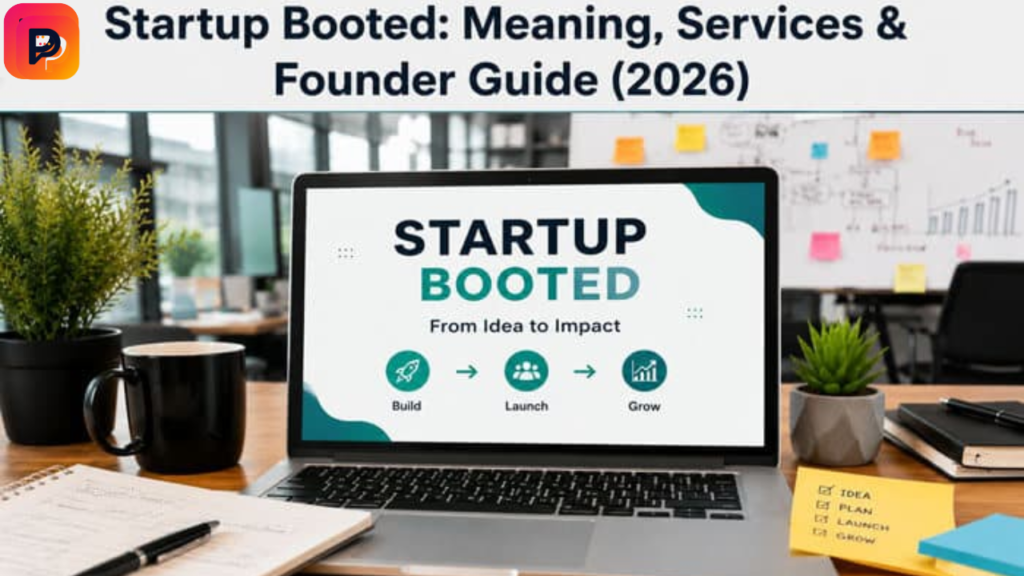
One mistake is raising before understanding why capital is needed.
Another is waiting too long because the founder believes fundraising represents a failure to bootstrap.
Both can hurt the company.
A strong startupbooted strategy treats timing as an economic decision rather than an emotional one.
Founders should also avoid building unrealistic financial forecasts simply to impress investors. A forecast showing extraordinary growth may attract attention initially, but investors can test assumptions quickly.
Another mistake is focusing exclusively on valuation.
Governance rights, liquidation preferences, pro rata rights, information rights, board influence, option pool changes, dilution, and future financing implications can matter significantly. The exact significance depends on the financing instrument and jurisdiction, so professional advice may be appropriate.
Finally, founders should avoid assuming that fundraising itself is the objective.
Money is useful only when management can convert it into stronger business fundamentals.
Conclusion
The startupbooted fundraising strategy offers founders a useful framework for thinking about capital without automatically choosing between complete bootstrapping and traditional venture funding.
Its central value is strategic flexibility. Founders can use customer revenue, personal resources, lean operations, and reinvested profits to build early traction, then consider external capital when money can accelerate a clearly defined opportunity.
The approach also encourages founders to think carefully about dilution, investor alignment, financial modeling, fundraising timing, and control.
However, startupbooted should not become a rigid rule. Some companies can grow successfully from revenue for years, while others need substantial external investment long before profitability. The right decision depends on capital intensity, market timing, competitive pressure, economics, risk, and the founders’ long-term objectives.
The best fundraising strategy is therefore not the one that raises the most money or preserves the most equity. It is the one that gives the company enough resources to reach its next important milestone while keeping the costs and obligations of capital proportionate to the value it creates.
Frequently Asked Questions About StartupBooted
What is StartupBooted?
StartupBooted is a startup-focused consulting business that presents services including fundraising strategy, financial modeling, budgeting, strategic planning, investor pitching, and related startup support. Its fundraising philosophy emphasizes founder control, sustainable traction, and selective outside capital.
What is a startupbooted fundraising strategy?
A startupbooted fundraising strategy combines elements of bootstrapping with selective external financing. Founders initially focus on revenue, lean operations, and traction, then consider investors or other capital sources when funding can accelerate a clearly defined business opportunity.
Is StartupBooted fundraising the same as bootstrapping?
Not exactly. Traditional bootstrapping generally means relying on founder resources and business-generated revenue without conventional outside investors. A StartupBooted-style fundraising strategy can include external capital while still prioritizing founder control, financial discipline, and reduced unnecessary dilution.
Can a bootstrapped startup raise venture capital later?
Yes. Bootstrapping does not prevent a startup from raising outside funding later. Stripe notes that companies can bootstrap for extended periods before eventually raising external capital. Building traction first may also give founders stronger evidence to present during investor discussions.
Is a startupbooted fundraising strategy better than venture capital?
Neither approach is universally better. Startupbooted fundraising can suit businesses capable of generating early revenue and growing without large upfront investment. Traditional venture capital may be more appropriate when rapid scaling, expensive development, infrastructure, manufacturing, regulatory work, or competitive timing requires significant capital before the business can finance growth itself and more.
